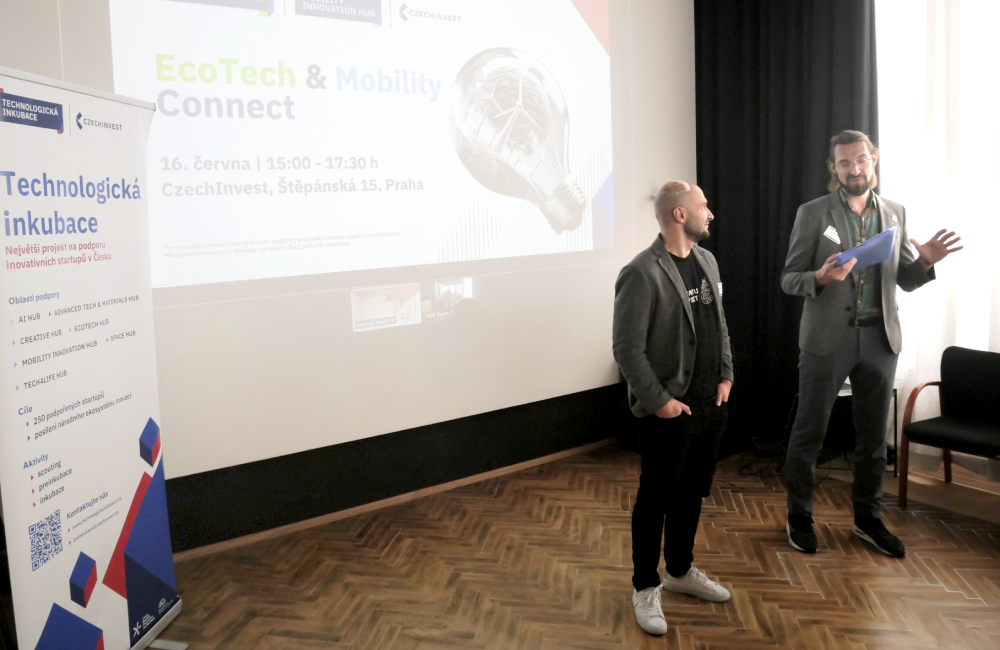
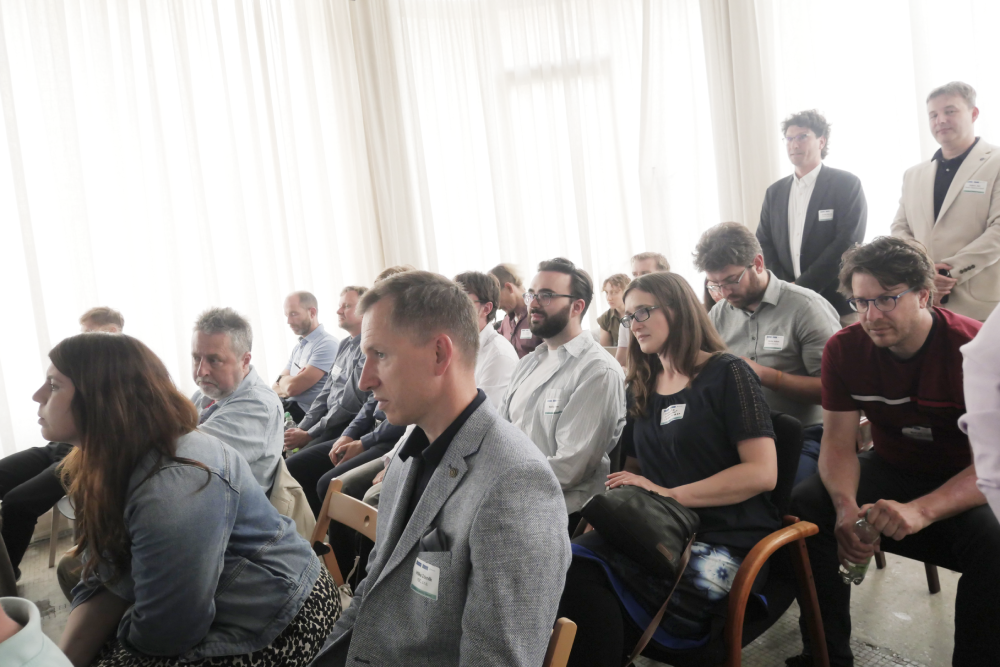
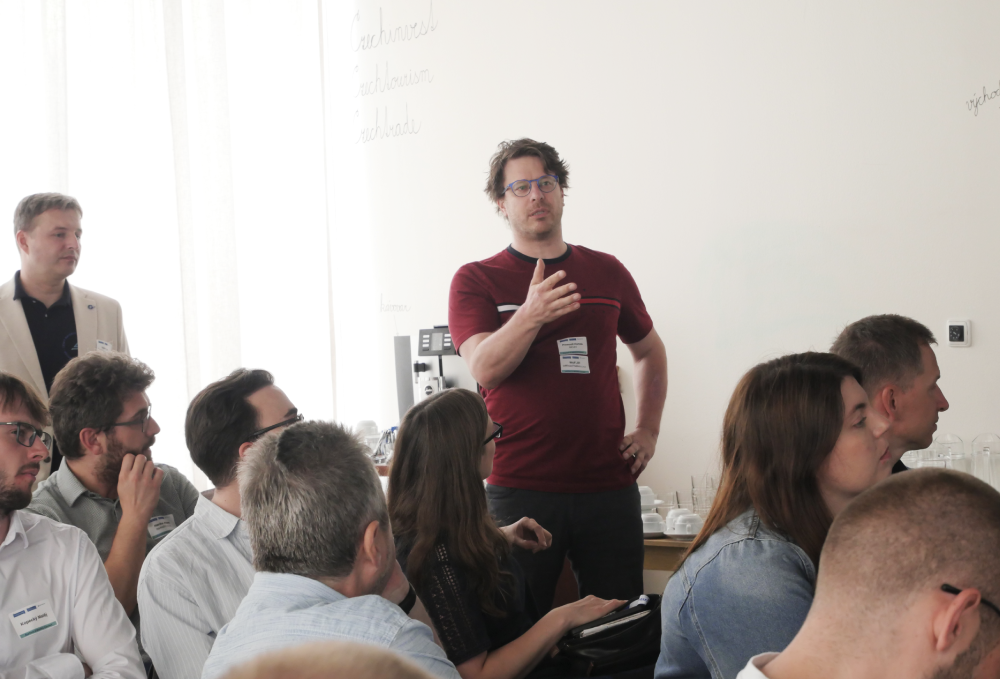
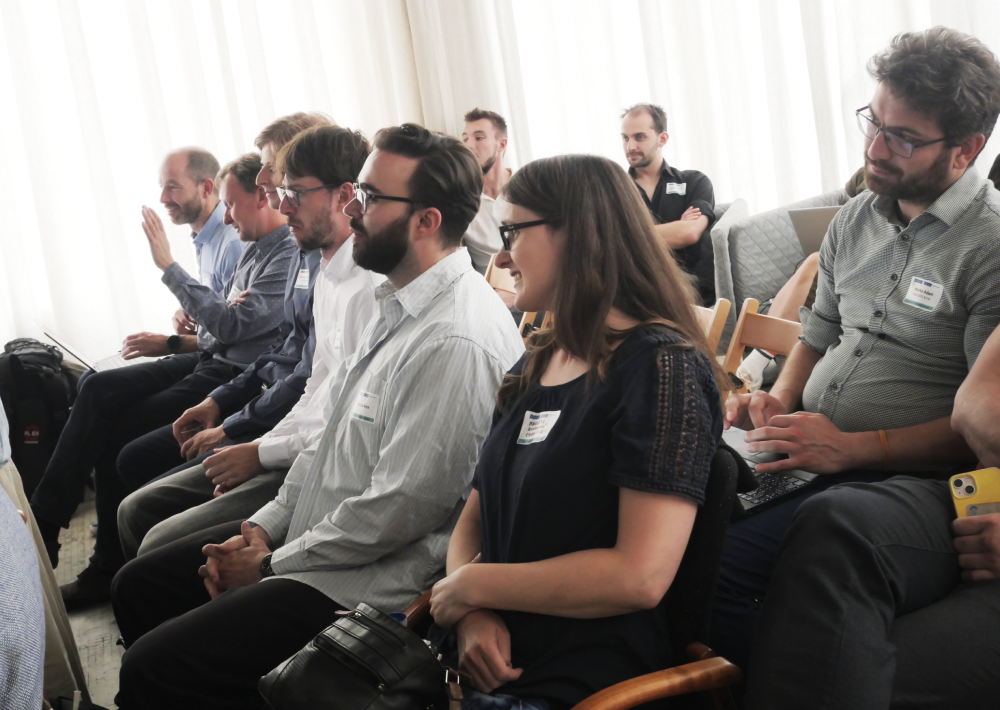
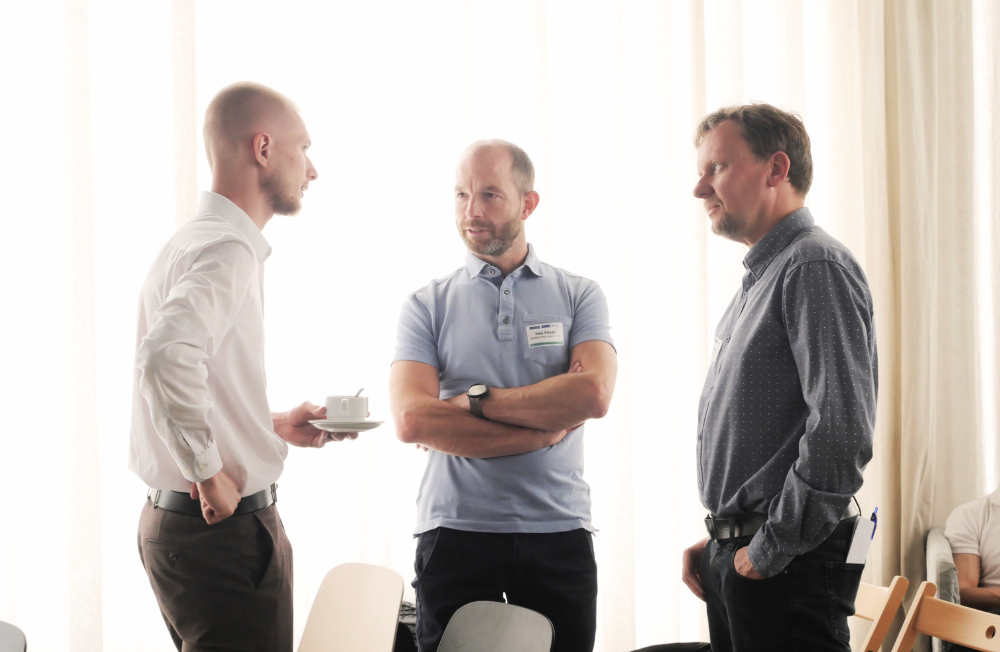
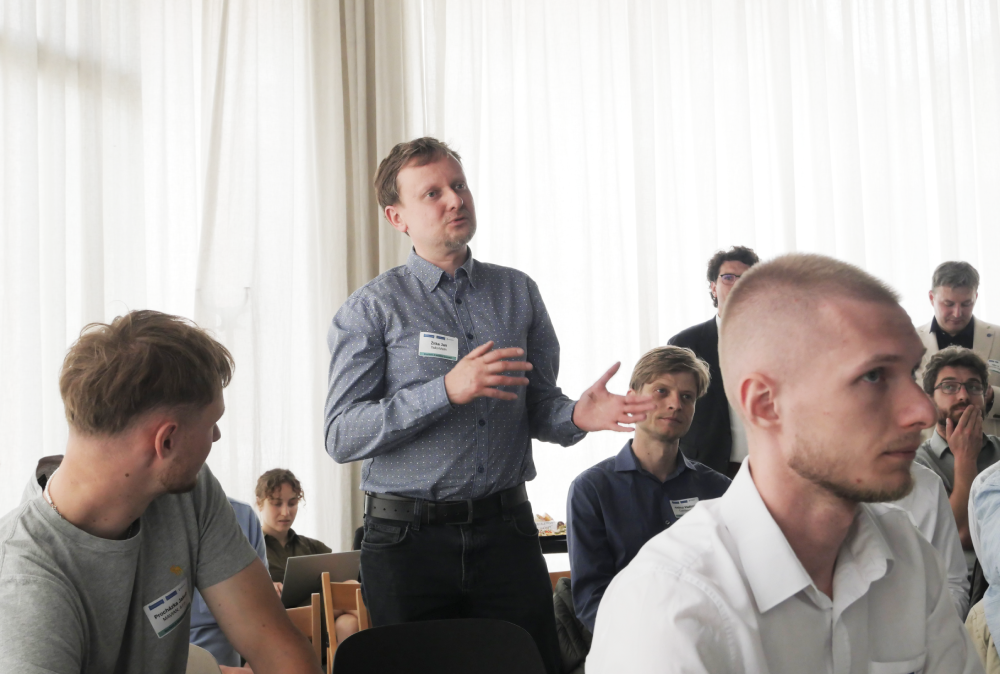
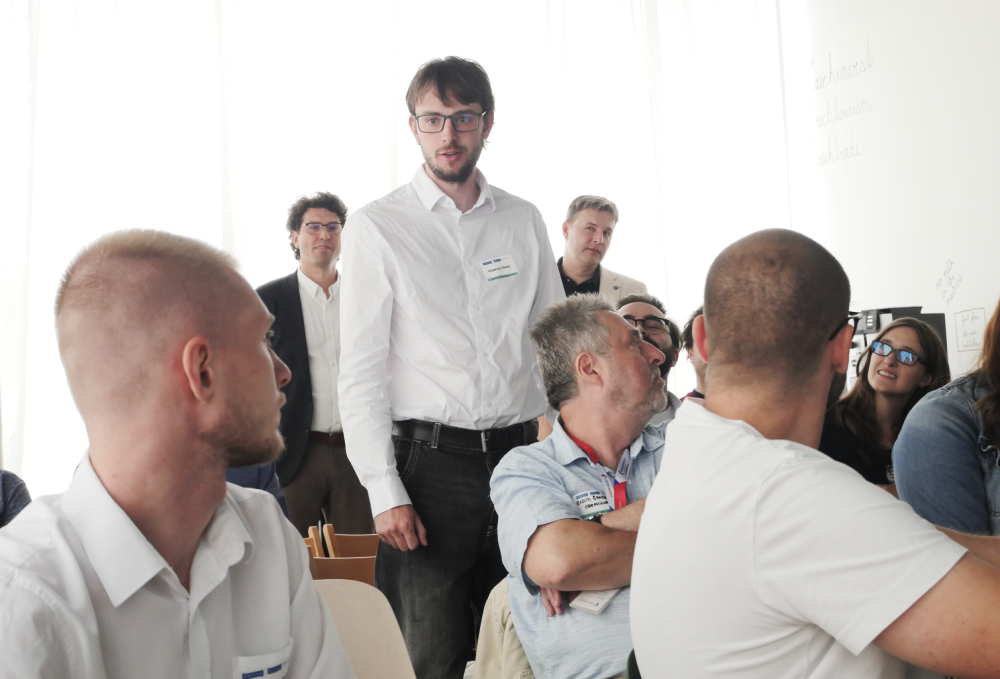
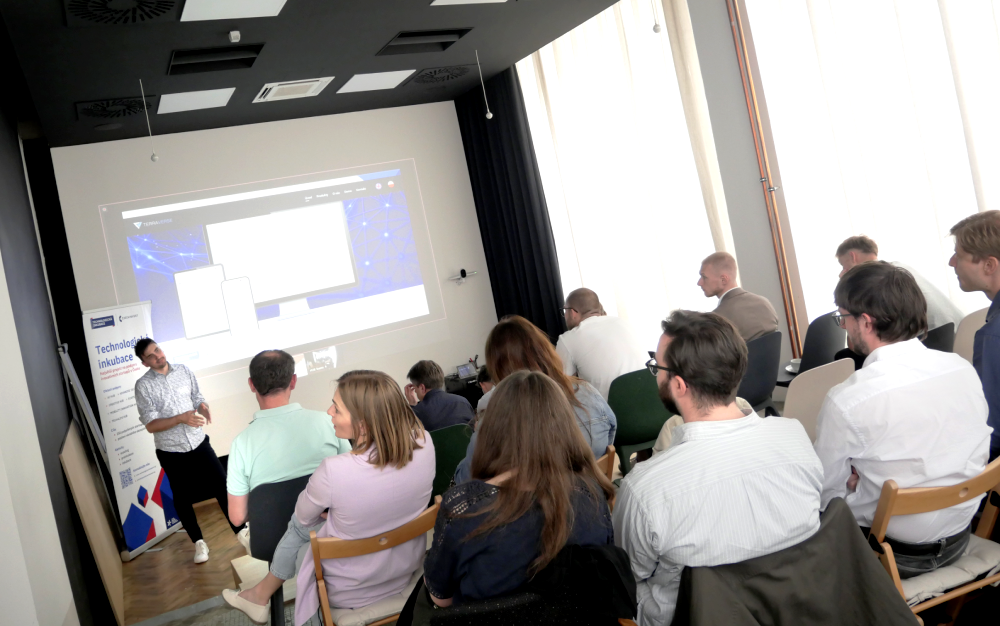
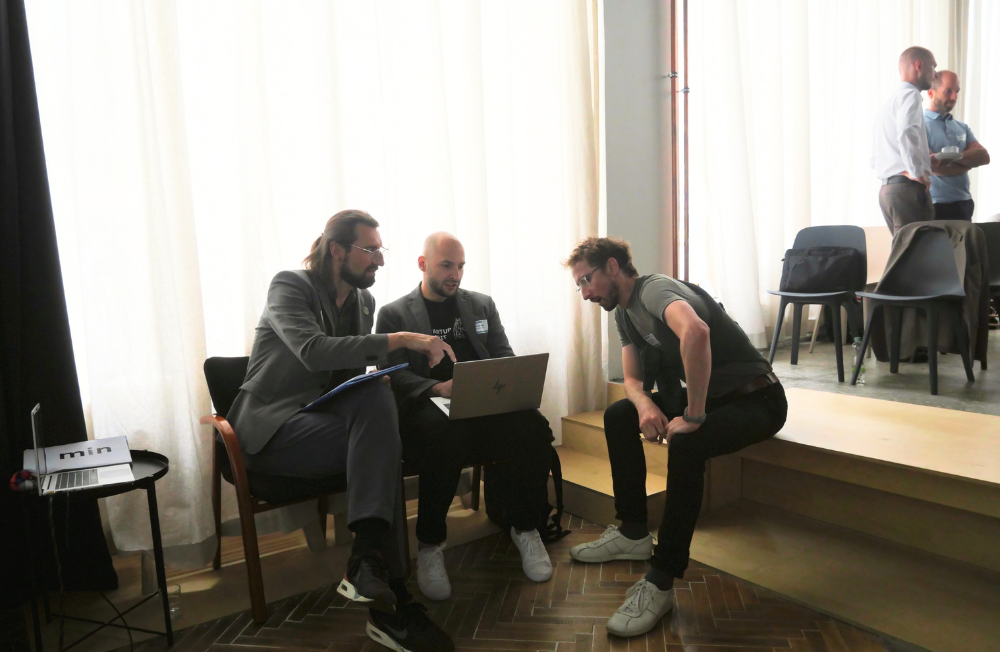
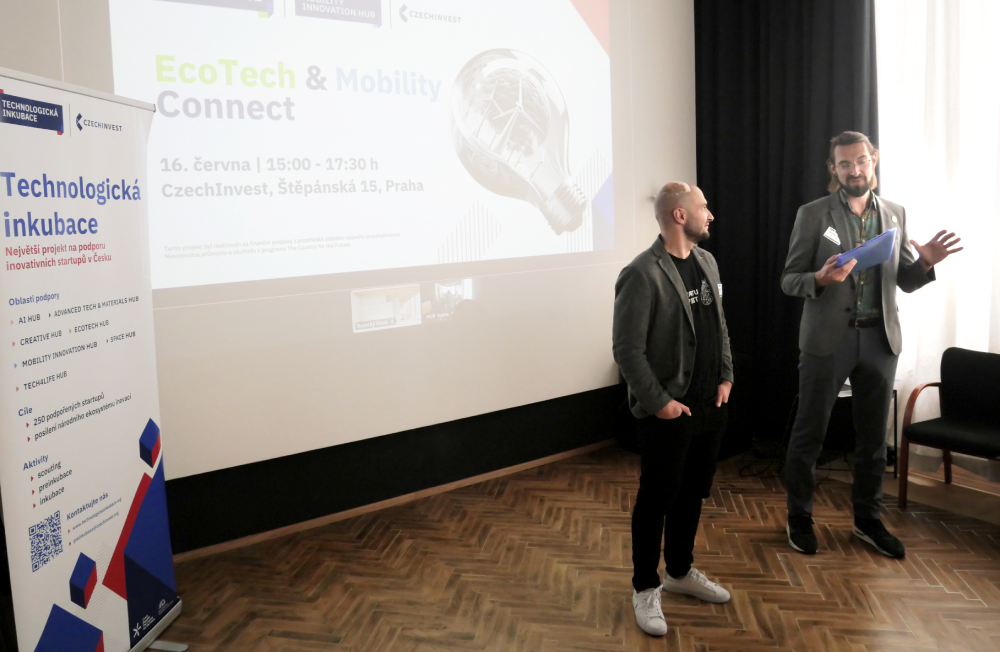
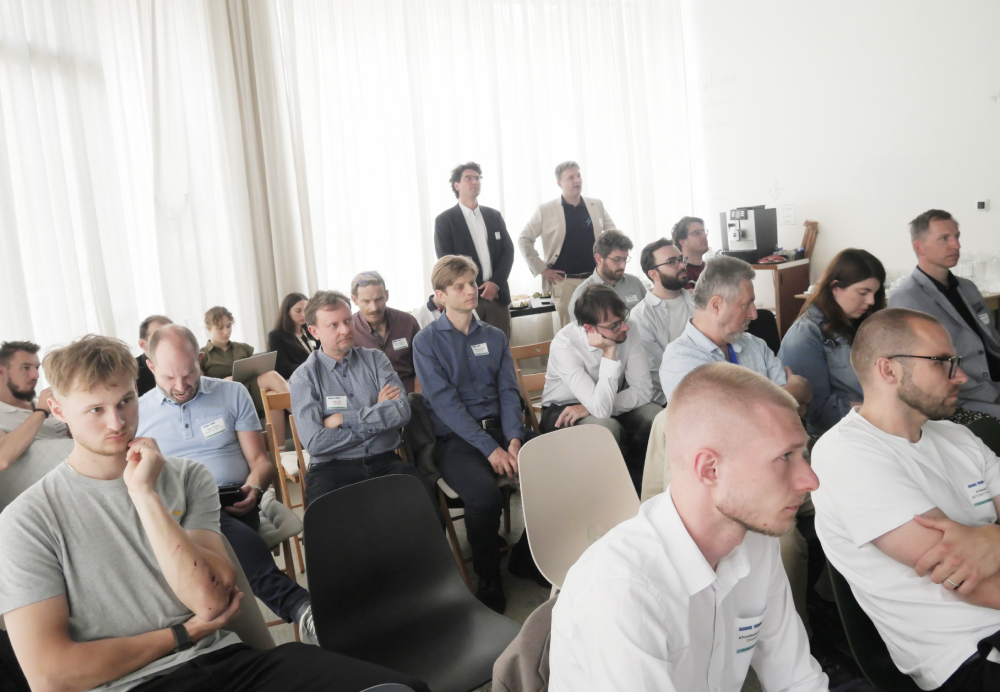
The EcoTech & Mobility Connect event brought together startups from the EcoTech Hub and the Mobility Innovation Hub with representatives from the public sector and the innovation ecosystem. Together, the participants explored new ways to test, implement, and develop innovations for sustainable cities and promote their wider practical application.
8
speakers
3
thematic blocks
1
common goal
On Tuesday, June 16, the first EcoTech & Mobility Connect meeting took place at the CzechInvest agency building. The program , led by Pavel Borecký, director of the EcoTech Hub, addressed topics such as collaboration between startups and the public sector, the development of urban innovations, and financing for further growth.
We set out for places where startup innovation hasn’t yet taken hold. What did we find?
“This is a new space for sharing experiences, feedback, and co-creating services,” saidPavel Borecký, director of EcoTech Hub, as he kicked off the event and introduced a new meeting format focused on actively connecting startups across hubs. As he noted, he believes that methods of collaborative work with the community should be used more frequently in the future.
Filip Krůta, director of the Innovation Department, explained the connection between clean tech and mobility startups, which often face common market and technological calls.“CzechInvest’s role is to build a functional innovation ecosystem that connects startups, science and research, public administration, corporations, and investors,” he added, noting that his goal is to create complementary services that will help companies not only get started but also enter the market and grow.
To start things off, the 18 startups in attendance introduced themselves as Treetino, BetonextorTailorMem, which operates in the fields of mobility, energy, the circular economy, materials research, and Smart City applications. Guests and the winners of Nakopni Praha, which laid the groundwork for networking.
Three Key Topics for the Future of Sustainable Cities
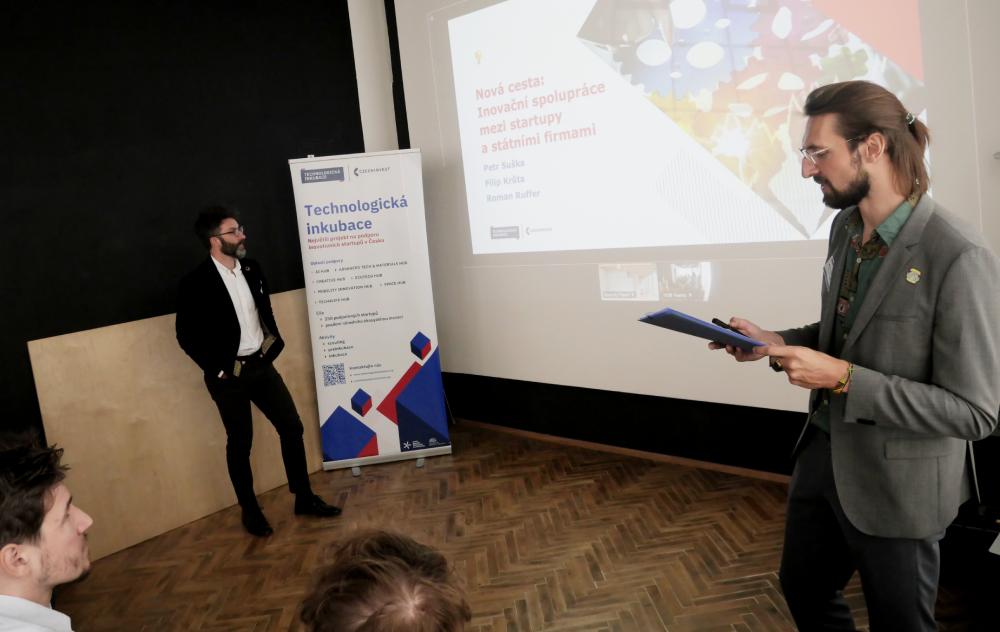
💡 A New Path: Innovative Collaboration Between Startups and State-Owned Companies How to Provide Solutions to State-Owned Companies?
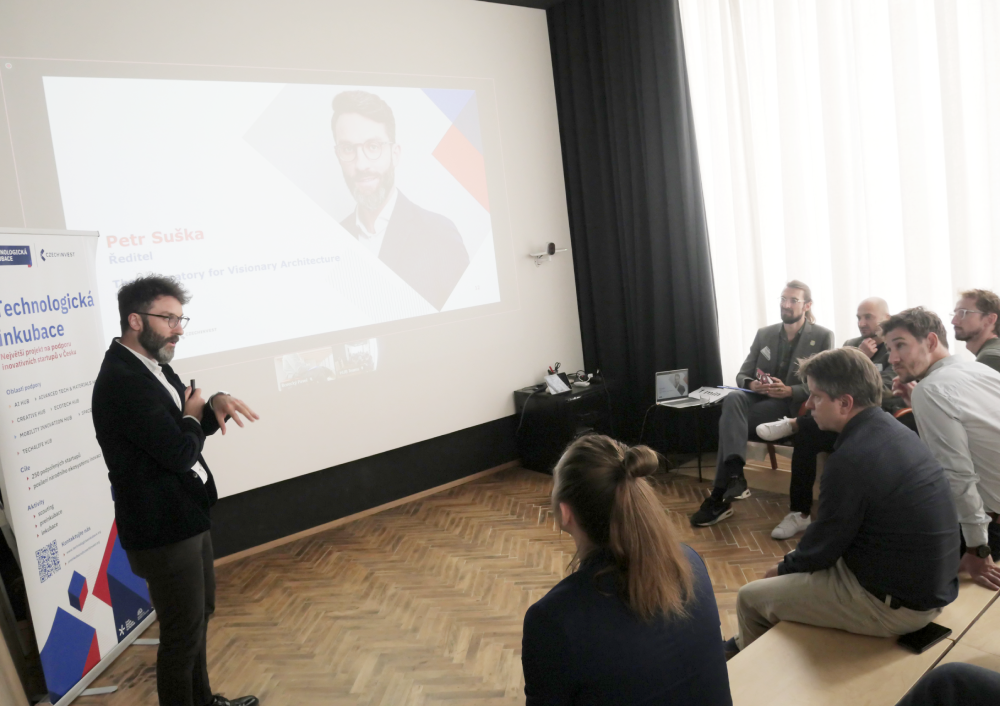
The first session was opened by a successful innovation leader at Operátor ICT and now the director of LAVAPetr Suška, who presented the public sector’s perspective and explained its specific characteristics. He emphasized that state-owned companies and institutions operate in an environment whererisk minimization, auditability, and demonstrable benefits are key. According to him, startups must understand that the public sector is not an accelerator, but rather an environment for validating their solutions and gaining important references. Those who base their business exclusively on the public sector should therefore be cautious, adapt to these specifics, and “solve real problems.”
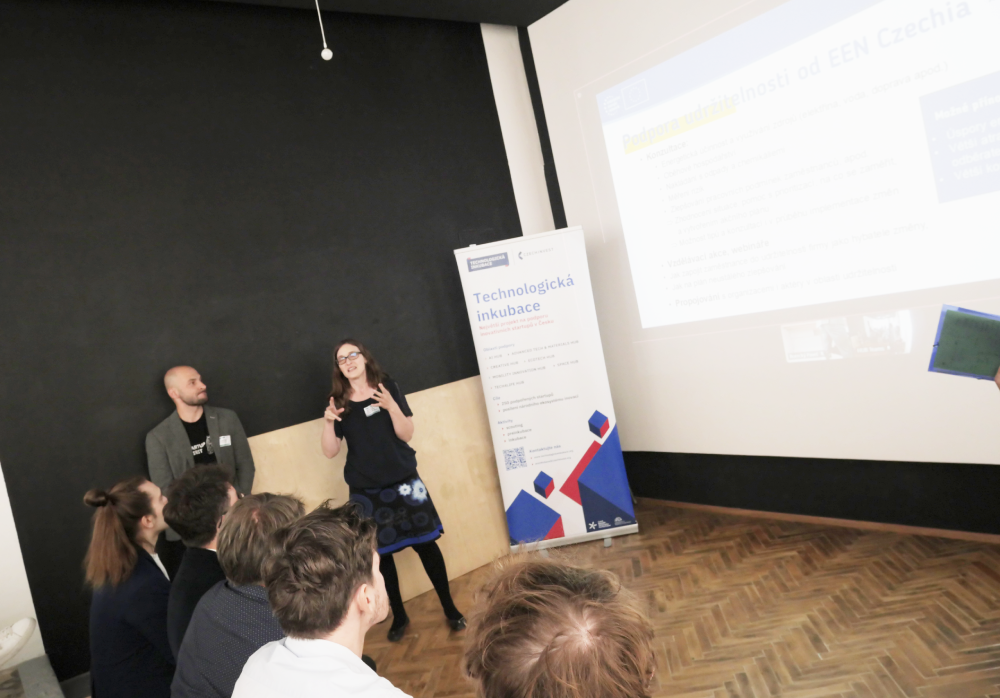
Filip Krůta was then joined on stage by Partnership Manager Roman Ruffer to present the Technology Scouting program. This service includes identifying innovation needs on the client’s side, finding suitable technology solutions among startups in the Technology Incubation and their subsequent connection, the so-called Demo Day, when startups present themselves to the client with the aim of obtaining a contract. ” Mercury MSandTempestLabsare now helpingČEPSwith the verification of transmission system design innovations or weather prediction thanks to AI tools, and now we want to go even further ,” Ruffer mentioned, announcing that CzechInvest has started offering the program to dozens of critical infrastructure organizations.
The discussion revealed that while startups appreciate access to large-scale projects—potentially even from ČEZ or the Czech Army—they also point out significant barriers in the public sector, including slow processes, a complex decision-making structure, and strong ties to existing suppliers. CzechInvest is here to open these avenues and help forge long-term relationships based on mutual trust, Krůta and Ruffer assured the audience.
💡The City and the Startup: Building the First Innovation District in the Czech Republic How can we test, implement, and scale these initiatives on the streets of our cities?
Miroslav Scheiner , Minister Havlíček’s Special Envoy for Smart City Development, emphasizedat the start of the second session that a true economic transformation requires the involvement not only of large cities but also of smaller municipalities, which make up the majority of the Czech Republic. The main barriers here are, in particular, a lack of capacity, administrative burdens, and limited familiarity with technology. How can we overcome these challenges? Using the example of the Finnish model of agile piloting, which Mirek and his partners developed as part of the international project PilotInnCities, we saw how beneficial it is to engage with the real-world environment, conduct testing through smaller, subsidized experiments with limited risk, and gradually shift the mindset of individual stakeholders—a process that opens up new possibilities.
Jakub Hruška, an expert on innovation infrastructure, placed his remarks in a broader context and highlightedthe importance of living labs, testbeds,and otherinfrastructure elements that connect startups, research, the public sector, and investors. Thanks in part to his efforts, the association CZELLAP, whichconnects Czech Living Labsand can thus be very beneficial for startups, as it will help spread the model further. In conclusion, Jakub supported Mirko’s idea and emphasizedthe need to build and expand a stable environment in which innovations are naturally tested and scaled to other locations in the Czech Republic. Both also called for an urgent strengthening of the organizational capacities of the national institutions tasked with this mission.
“From identifying their strategic priorities, to matching them with the solutions offered by our startups in the field of technology, to securing successful public contracts,”said Pavel Borecký, describing how CzechInvest plans to collaborate with municipalities in the “Technology Scouting for Cities” initiative. In the first phase, the goal is to systematically support selected parts of Prague as key partners for testing innovations, where we also aim to inspire bolder visions: building a new city as compact innovation districts modeled after Munich, Eindhoven, or Stockholm.
In the ensuing discussion, it was noted that technology novelty is often of secondary importance to cities and companies, as they evaluate the effectiveness of innovation primarily in terms of its economic impact (savings and efficiency). Nevertheless, pilot programs are and will continue to be useful, especially if they are distributed evenly and respond to regional specifics. “Let’s focus on the power of real results, not procedural formalities,” was the concluding remark in the debate over the administrative burden of the Technology Incubation program itself.
💡VC Funds: Goals, Expectations, and Experiences How to Raise Investment Capital for Business Growth?
Daniel Szántai, CEO Terraverse, shared the startup’s experience in dealing with investors and emphasized that securing investment is a relationship-building process that requires an active approach, much like “dating.” Startups should systematically seek out investors, build relationships with them, and tailor their communication to the investors’ expectations. He also placed great emphasis on first impressions and the ability to work with feedback. According to him, failure is not a negative outcome, but an important source of learning that helps a startup improve its positioning.
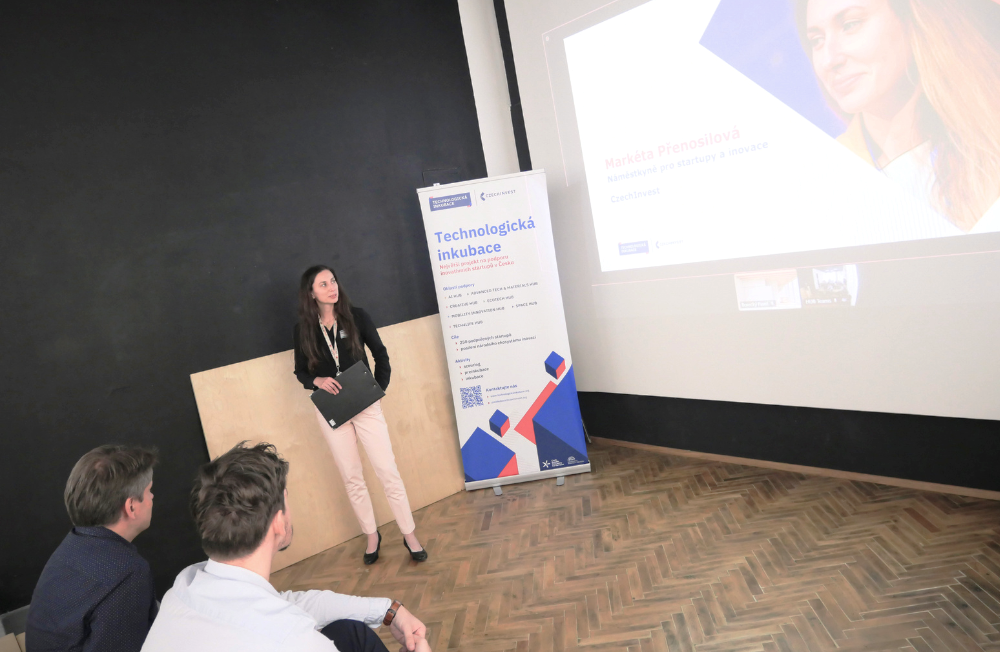
Markéta Přenosilová, CzechInvest’s Deputy Director for Startups and Innovation, added to Daniel’s recommendations with a systemic perspective on the investment environment at the very end of the event. She explained the differences between venture capital and private equity and highlighted the specifics of the Czech market: “While VC funds invest in companies at an earlier stage and prefer rapid growth, private equity focuses more on more stable and mature companies.” She also lamented the lower volume of private investment in clean technologies. However, the upcoming “European Competitiveness Fund” mega-fund represents a significant opportunity for our startups as well, offering a new chance to catch up with European trends.
The discussion highlighted the difference between the expectations of startups and investors. While startups often seek quick funding, investors emphasize detailed analysis, stability, and long-term potential. This difference must be actively bridged through effective communication.
What do wetake away from the meeting?
The EcoTech & Mobility Connect workshop not only provided an opportunity to share experiences but also generated concrete ideas for the further development of technology incubation programs and collaboration between startups and the public sector. The seminar confirmed that the Czech innovation ecosystem faces a number of systemic barriers, particularly in the area of collaboration with the public sector.
CzechInvest’s role as a facilitator and connector—helping to bridge the gap between large and small players, as well as multinational and local entities—is proving to be irreplaceable. Moreover, demand for the services currently being developed is very strong.
The program will feature investor conferences, demo days, pitching sessions for investors, matchmaking and networking, expert lectures and workshops, as well as events focused on defense and dual-use technologies.
From among the 50 startups that entered, the jury selected 12 finalists. Meet the companies that will compete for the audience’s favor and prizes from the competition’s partners on October 20 at the OX Club in…
How can sustainability help companies win new contracts, reduce costs, and boost their competitiveness? That will be the topic of the next workshop in the Green Evolution Lab series.
The event takes place on October 20 at Prague’s OX Club, welcoming over 500 participants from Czechia and abroad. Join us to connect with key players in the tech ecosystem and explore new opportunities.