How is it possible to ensure that patients with speech disorders receive a timely diagnosis and effective therapy? With support from Technology Incubation, the startup Scicake is developing Fonafix, a smart system that eases the work of speech therapists, simplifies administration and provides patients with therapy tailored to their needs. Thanks to the aforementioned support, the solution is ready for introduction to the market in compliance with the requirements for medical devices.
For patients with speech disorders resulting from, for example, a stroke or cerebral palsy, diagnosis and subsequent therapy can be a long and difficult process. The purpose of the Fonafix system from Scicake (pronounced “sci-cake”) is to combine digital biomarkers (measurable parameters obtained from the sound of speech and movement of the facial muscles) and artificial intelligence in order to provide speech therapists with quick, objective diagnoses and to design individualised therapy, which can additionally be monitored remotely.
From research to a technology suitable for clinical practice
The idea behind the establishment of Scicake arose from the research work of Jiří Mekyska, Zoltán Galáž and Ján Mucha of the Brain Diseases Analysis Laboratory (BDALab) at the Brno University of Technology Faculty of Electrical Engineering and Communication Technologies. They realised that the results of scientific work were finding their way into actual practice too slowly. As Ján Mucha explains: “The transfer of scientific findings into clinical practice is insufficient. We wanted to change the way that research results reach the people who actually use them.”
From the beginning, Scicake focused on services in the area of data analysis and machine learning, though it gradually shifted its focus to the development of Fonafix – an AI-supported system for speech-disorder diagnosis and therapy. Dysarthria, in which a patient’s speech is unintelligible, monotonous or very quiet, alone afflicts approximately 80,000 people in the Czech Republic every year. The impetus behind the development of the system was the rising interest among clinical speech therapists and continuation of long-term research of digital speech biomarkers. “We discovered that, from the technological perspective, the field of speech therapy is underdeveloped and we saw strong potential in its digitalisation,” Mucha adds.
Technology Incubation helped transform research into a product
When Scicake joined the Technology Incubation project, it had a strong research base, but it needed to bring its solution from the academic sphere into clinical practice.“The greatest challenge involved converting a research tool into a full-fledged product that would be ready for use in the everyday work of speech therapists and patients,” Mucha says. Technology Incubation provided essential financing for the further development of the Fonafix system. Thanks to this support, Scicake was able to substantially accelerate the development of the therapeutic part of the system and create a module for speech therapists and a mobile app for patients, while also preparing extensive digitalised therapeutic materials including instructional videos and supplementary content. The company also completed the standardisation of the short version of the 3F Test (K3F), a traditional printed test used in assessing dysarthria. It further strengthened its internal processes and obtained certification in the area of medical devices, which opened the door for Scicake’s safe entry into the market. At the same time, the company enhanced its intellectual-property protection and established a legal framework for the product’s further growth.
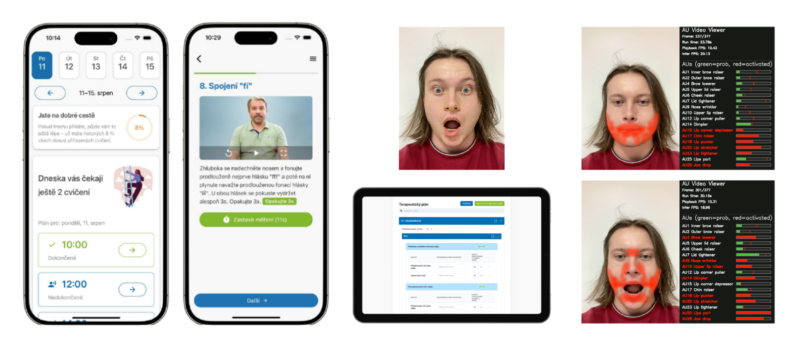
The Fonafix system from Scicake.
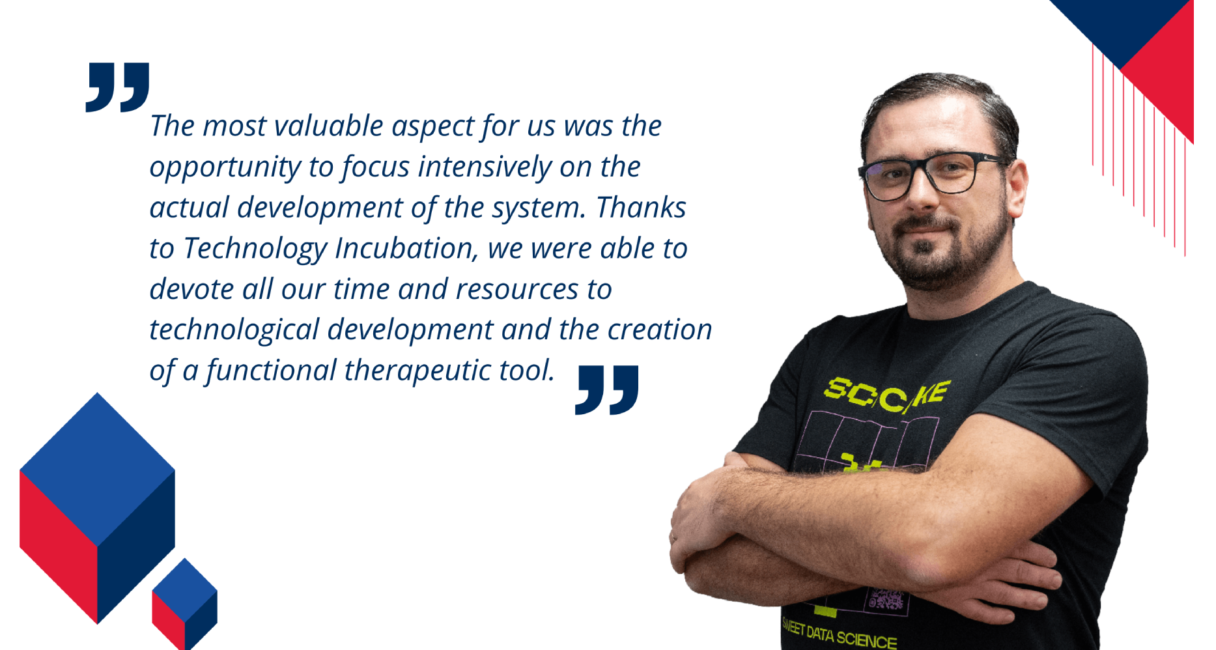
“Scicake is a very good example of a project in which the value added of state aid is clearly visible. Thanks to Technology Incubation, the company succeeded in significantly accelerating the transition from the research phase to real clinical practice and preparing the product in accordance with the strict requirements for medical devices,” adds Technology Incubation project manager Sofie Deliu. The project thus reached a higher level of professionalism and was brought significantly closer to real-world use in clinical practice. “Incubation provided us with the necessary space and certainty for concentrated growth. The most beneficial thing for us was the possibility to focus intently on the development of the system. Thanks to the support we received, we could fully dedicate our time and capacities to technological development and the creation of a functional therapeutic tool,” Mucha says. “With the support from Technology Incubation, Fonafix’s introduction to the market would have been slowed considerably.”
Sofie Deliu confirms the programme’s broader role: “From the perspective of state aid, Technology Incubation is a form of patient capital. It helps startups to get through the period when development involves the highest risk and enables them to focus on what’s important – creating a high-quality product – without immediately being pressured by the need for return on investment.”
The end of paperwork: A digital version of a traditional test
The result is the digitalisation of a crucial part of logopaedic examinations, which partly involved converting a traditional printed dysarthria test into a digital form. The aim was to simplify the entire process while maintaining diagnostic precision. “The speech therapist uses Fonafix on a mobile telephone or any other device connected to the internet and, together with patient, carries out a series of tasks, such as speaking exercises and movements of the tongue and lips. After every task, the system automatically generates a report and calculates the overall score,” Mucha explains. The system can also automatically create a final report. Whereas a speech therapist ordinarily spends 15 to 30 minutes writing, in Fonafix the final report is generated with a single click. Digitalisation thus shortens the examination time by a factor of five. The startup plans to enhance its diagnostics in the future with the addition of digital biomarkers derived from speech and the movement of facial muscles. These numerical values obtained from audio and video recordings will enable an even more accurate assessment of speech quality and tongue-movement fluidity.
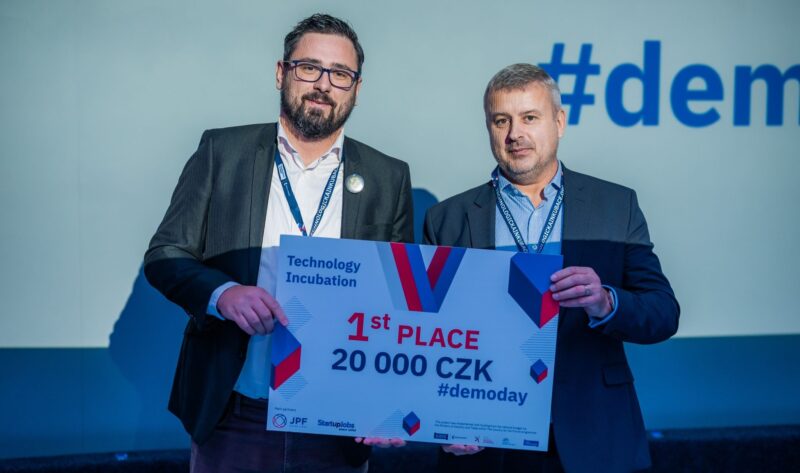
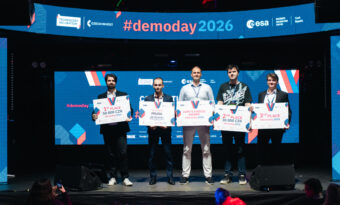
Scicake co-founder Ján Mucha (left) accepts first prize in CzechInvest’s Technology Incubation #demoday competition.
Interdisciplinarity as the key: Connections that are transforming healthcare
Experts in the fields of speech therapy, neurology, research and technological development in Czechia and abroad are involved in the development of Fonafix. Thanks to interdisciplinary collaboration, the team can continuously test, validate and improve the system in direct contact with clinical practice. “We established cooperation with the broader logopaedic community not only in the Czech Republic, but also elsewhere in the world. The feeling that your work is really helping someone is priceless,” says Mucha. This collaboration has brought forth not only new findings and lines of development, but also the creation of new jobs for specialists in various sectors. Fonafix is thus bringing about the formation of an interdisciplinary team with a social dimension that is capable of bringing about positive changes in the field of healthcare. In this respect, it shows the direction that digital healthcare may take in the coming years and the role that responsibly managed artificial intelligence can play in clinical practice.
The team plans to gradually expand abroad – the first step is introduction of the system in Spain in cooperation with leading experts. A further objective is to bring the technology to bear on a broader range of speech disorders, including aphasia, for example. Concurrently, a clinical trial is being carried out with focus on developing digital biomarkers, which will enable a more precise response to patients’ needs and support their rehabilitation. “Our long-term mission is to bring scientific research to as many people as possible and to improve their lives. The Fonafix system can significantly contribute to accomplishing that,” Mucha concludes.
The program will feature investor conferences, demo days, pitching sessions for investors, matchmaking and networking, expert lectures and workshops, as well as events focused on defense and dual-use technologies.
From among the 50 startups that entered, the jury selected 12 finalists. Meet the companies that will compete for the audience’s favor and prizes from the competition’s partners on October 20 at the OX Club in…
How can sustainability help companies win new contracts, reduce costs, and boost their competitiveness? That will be the topic of the next workshop in the Green Evolution Lab series.
The event takes place on October 20 at Prague’s OX Club, welcoming over 500 participants from Czechia and abroad. Join us to connect with key players in the tech ecosystem and explore new opportunities.